
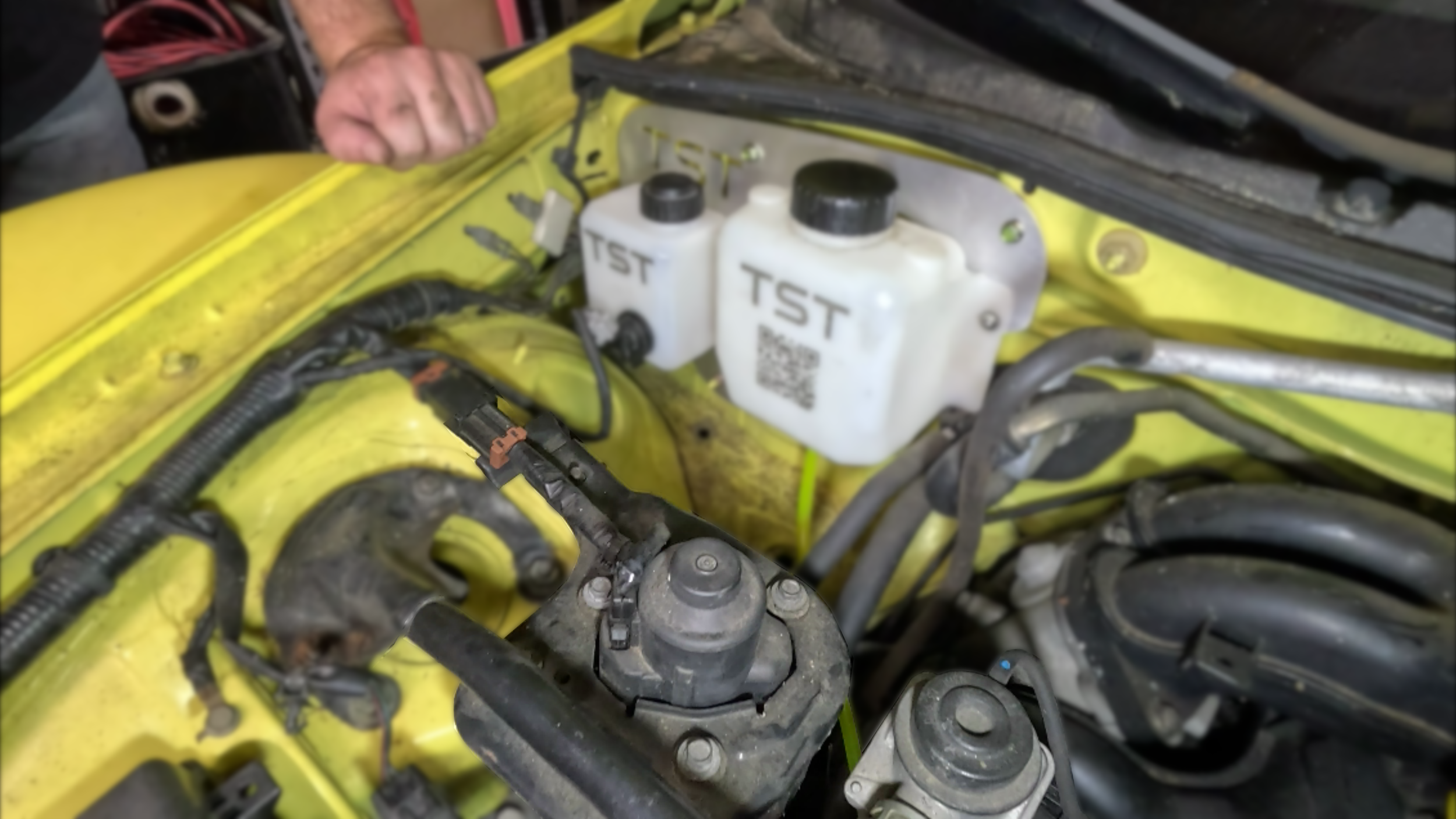
Air Pump and injection tube location
The secondary air injection pump on the Mazda RX-8 is one of the first components rotary enthusiasts look to remove when simplifying the engine bay. Whether you are building a track car, chasing a cleaner layout, or tired of cold-start pump noise, unbolting the assembly seems simple enough. However, pulling the air pump on the Renesis 13B-MSP isn't just a matter of slapping on a block-off plate. The factory mounting bracket doubles as an anchor for two vital electrical components. Here is an engineering breakdown of what the air pump does, why people remove it, the operational implications, and how to execute the delete properly without leaving sensors dangling behind your headlight.
1. What Does the Air Pump Actually Do?
The secondary air injection (SAI) pump is an emissions control device designed exclusively for cold-start scenarios. When you start a cold Renesis engine, the powertrain control module (PCM) runs in open-loop mode, dumping extra fuel into the combustion chambers. This rich mixture leads to elevated levels of unburned hydrocarbons exiting through the exhaust ports. The electric air pump draws filtered fresh air from the intake and forces it directly into the exhaust manifold via a one-way check valve (air control valve). This influx of oxygen reacts with the hot, unburnt fuel in the exhaust stream, igniting it inside the manifold. This process achieves two things:
It reduces tailpipe emissions during the engine’s dirtiest operational window.
The exothermic reaction generates rapid heat, bringing the catalytic converter up to light-off operating temperature in a fraction of the time.
As the system warms up, typically within 30 to 90 seconds, the PCM shuts the pump off and closes the air control valve. For the rest of your drive, the pump sits completely idle as dead weight.
2. Why Would You Want to Delete It?
If the pump only runs for about a minute per drive cycle, why bother pulling it out?
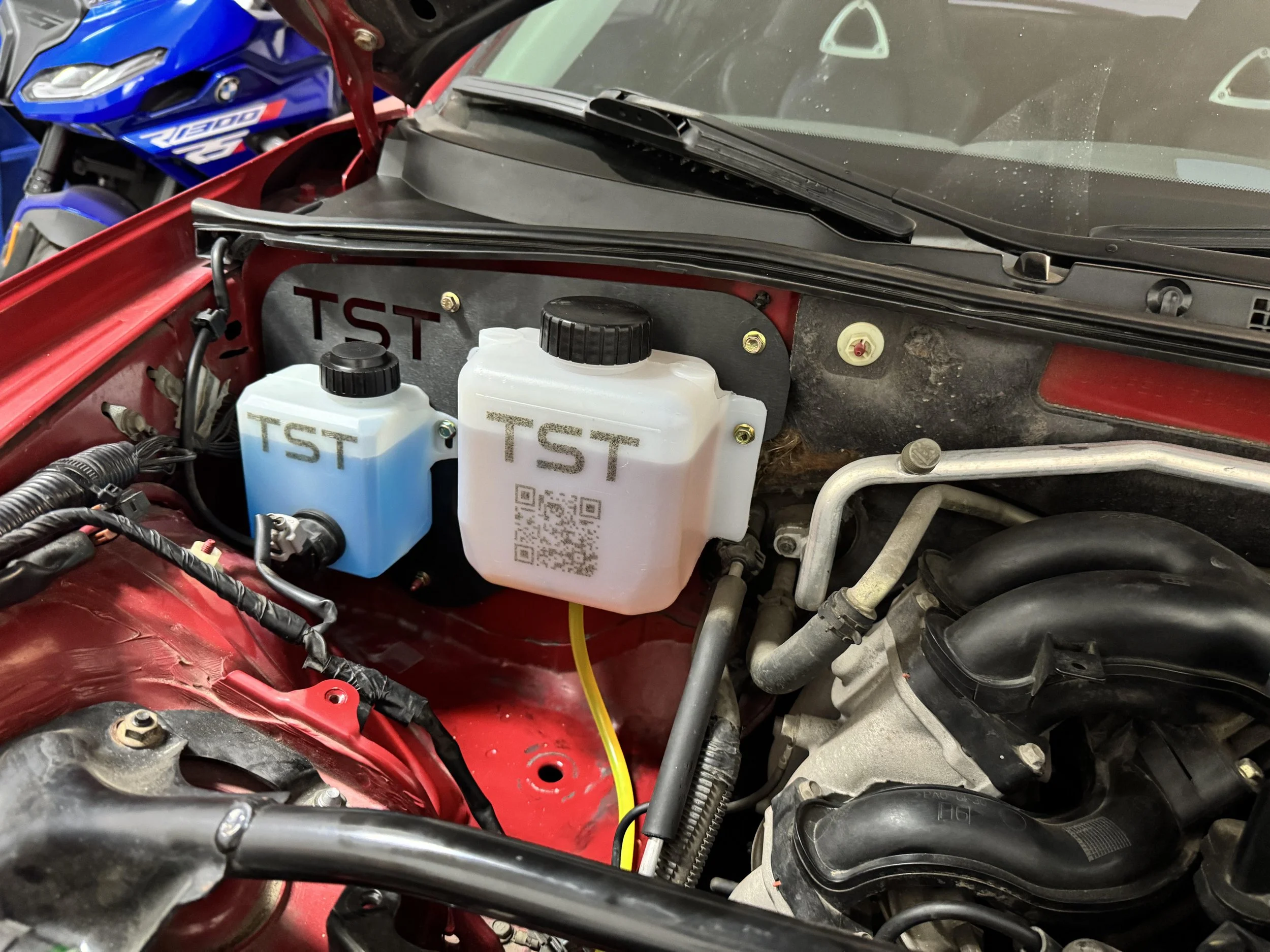
Clean engine bay with air pump and injection tube removed and TST’s anodized black Sohn tank mount plate
Valuable Engine Bay Real Estate: The air pump and its sprawling stamped bracket occupy prime territory on the front passenger side of the engine bay. Deleting it opens up crucial clearance for aftermarket catch cans, auxiliary oil injection tanks, aftermarket ignition setups, or custom forced-induction piping.
Component Failure and High Replacement Costs: As RX-8s age, moisture and carbon buildup can cause the air control check valve to fail, allowing exhaust back-pressure into the pump. When the internal bearings fail, the pump screams like a failing jet turbine on cold starts. Replacing the OEM pump with a new unit is notoriously expensive for a part that only runs for seconds.
Catless and Track Exhaust Systems: If your car is dedicated to track use or running an aftermarket catless midpipe, the pump’s primary job—accelerating catalytic converter warm-up—is entirely moot.
Engine Bay Simplicity: Removing the pump, air control valve, and associated rubber plumbing cleans up the Renesis bay, sheds front-end weight, and eliminates several failure-prone vacuum and electrical connections.
3. What Are the Implications of Deleting It?
Before taking a ratchet to your car, you need to understand the mechanical and electrical trade-offs.
Emissions and Catalytic Converter Life
If you still run a factory catalytic converter, deleting the air pump means the cat will take significantly longer to reach operating temperature. Over time, raw cold-start hydrocarbons can accelerate cat degradation and clogging—a known failure point on rotary engines.
Check Engine Lights (CEL)
The PCM monitors the secondary air system’s electrical load and air control valve solenoid circuit. Removing components can trigger diagnostic trouble codes (DTCs) such as P0410, P0411, or P2259. While many owners flash their PCM tables to disable these DTCs, it is entirely possible to complete the delete on a Series 1 without a CEL, as confirmed on our own test vehicle, provided the factory electrical circuits and atmospheric sensors remain intact and properly handled.
The Hidden Trap: Fuel Pump Resistor & Pressure Transducer
This is where most DIY air pump deletes go wrong. The factory stamped steel bracket that holds the air pump does not just support the pump. Bolted directly to it are:
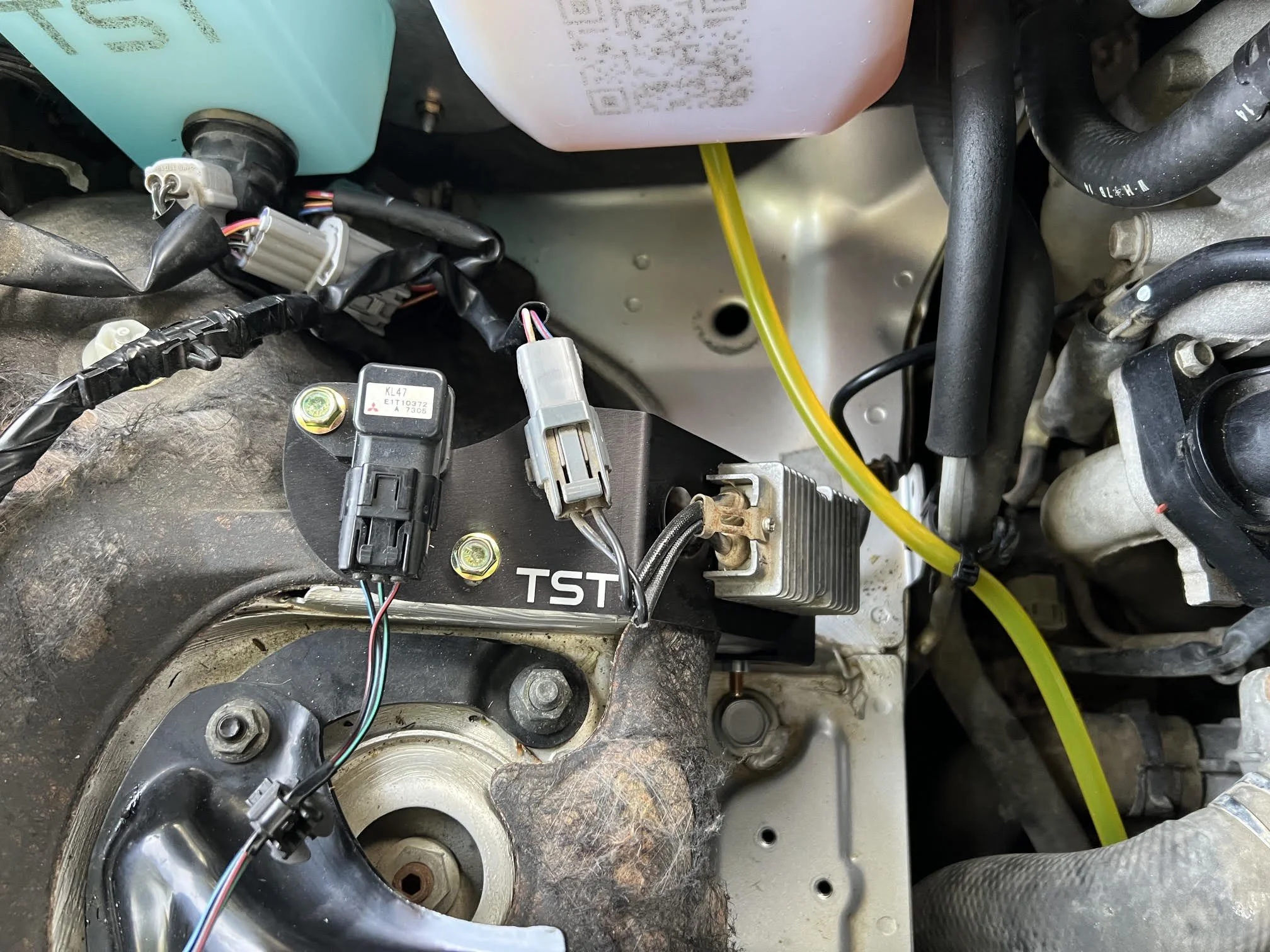
The Fuel Pump Stepping Resistor: This resistor steps down voltage to the fuel pump during low-load conditions. It gets hot and relies on being securely mounted to dissipate heat. If it is left disconnected, the car will stall or starve for fuel.
The Barometric Pressure Transducer: The PCM uses this sensor to gauge atmospheric pressure and calculate baseline fueling trims across different elevations.
When people unbolt the OEM air pump bracket, they suddenly realize these two vital components have lost their home. The typical hack—leaving them hanging by their wiring harnesses or zip-tying them loosely near the frame rail—exposes delicate electronics to excessive vibration, heat, and moisture.
4. What Parts Do You Need to Do It Right?
A clean delete requires sealing the exhaust manifold, plugging the intake vacuum feed, and securing the orphaned electronics back in their factory positions. Our kits are engineered specifically for the Series 1 (2004–2008) Mazda RX-8. (If you own a Series 2 and are interested in testing fitment, please reach out to us directly so we can verify compatibility.) Because every build is different, our components are offered modularly at Twin Sticks Technologies:
1. Exhaust Manifold Block-Off Plate Kit
When you remove the factory air control valve from the exhaust manifold, you are left with an open exhaust port and an unused vacuum port.

TST Air injection tube blank off
Precision Sealing: Our block-off plate is cut to seal the manifold port completely. It is engineered to reuse your factory exhaust hardware and the factory multi-layer stainless steel gasket, delivering an exhaust-tight seal that stands up to rotary exhaust gas temperatures without blowing out.
Vacuum Cap Included: The kit includes the dedicated vacuum cap required to plug the vacuum line port at the intake manifold that previously fed the air control solenoid valve.
Available standalone on twinstickstech.com.
2. Fuel Pump Resistor & Pressure Transducer Relocation Bracket
Instead of butchering your factory bracket with an angle grinder or resorting to zip-ties, our purpose-built relocation bracket secures both the OEM fuel pump resistor and the barometric pressure transducer cleanly back into the chassis.
Provides solid, vibration-free heat sinking for the resistor.
Keeps the wiring harnesses tucked, protected, and routed cleanly.
Available standalone on twinstickstech.com for owners who already sourced a plate, or bundled together if you are starting from scratch.
Do It Right the First Time
Deleting the air pump is one of the easiest ways to de-clutter a Series 1 Renesis engine bay, provided you don't compromise your fuel system or sensor wiring in the process.
Head over to www.twinstickstech.com to check out our modular block-off plate kits, mounting brackets, and custom rotary components.